SBMA and ALS4: fifteen years of disease-biology research
Dr Bilal Malik — SBMA and ALS4 Research Group, UCL Queen Square Institute of Neurology
Research Summary
Over two decades I have worked to define the molecular mechanisms of selective motor neuron and muscle degeneration in spinal and bulbar muscular atrophy (SBMA, also known as Kennedy's Disease) and ALS4, using cellular, iPSC-derived and mouse models. I lead the SBMA and ALS4 Research Group at UCL Queen Square Institute of Neurology, working alongside Professor Linda Greensmith, and have built long-standing international collaborations — most notably with Professor Albert La Spada (UC San Diego; now Duke University), who provided both the AR100 SBMA mouse model and the ALS4 SETX-R2136H mouse model used throughout this programme, and Dr Craig Bennett (UC San Diego), co-provider of the ALS4 model. This work has produced 25+ peer-reviewed publications and secured over £800,000 in competitive international funding, and has progressively moved from identifying causal disease mechanisms toward computational, AI-driven approaches to therapeutic discovery.
Research Output Summary — Key Findings
Organised below by theme: transcriptomic (RNA-seq) discovery, muscle pathology, translational/therapeutic strategy, and the AI-driven extension of this experimental programme.
1. RNA-Seq & Transcriptomic Discovery
Gene expression analysis and Chmp7 (Malik et al., Scientific Reports, 2019; senior author): A global transcriptomic screen of cultured embryonic (E13) spinal cord motor neurons from AR100 versus wild-type mice identified 178 significantly upregulated and 287 downregulated genes (differences confirmed by PCA and hierarchical clustering). qPCR validated upregulation of Itih5, Serping1 and the transcription factor Arnt (Hif1β), and downregulation of Chmp7, an ESCRT-III component involved in endosomal trafficking and multivesicular body formation. A STRING protein–protein interaction network built from the differentially expressed genes centred on EGFR, UQCRC1 (a mitochondrial respiratory chain protein), FANCE (a DNA-repair gene) and CTNNB1 (a Wnt-pathway effector), with pathway enrichment spanning Huntington's, Parkinson's and Alzheimer's disease gene sets, Wnt signalling, focal adhesion, insulin signalling, endocytosis, ErbB signalling and oxidative phosphorylation.
Chmp7 dysregulation proved striking and disease-specific: a 2.74-fold decrease in presymptomatic (3-month) AR100 spinal cord relative to AR20 controls, alongside a 2.5-fold increase in AR100 tibialis anterior muscle; decreases were also seen in the MN-1 AR65Q cell line and, crucially, in laser-capture-microdissected motor neurons from presymptomatic AR100 mice — before symptom onset. Related ESCRT-III genes Chmp2b and Chmp4c were also downregulated (1.34-fold and 1.64-fold respectively). The change was specific to SBMA: Chmp7 expression was unchanged in the SOD1-G93A ALS and SETX-R2136H ALS4 mouse models. In human SBMA patient iPSC-derived motor neurons, CHMP7 was significantly decreased in two of three SBMA lines tested (1.47-fold and 1.32-fold, both p<0.01) relative to two unaffected control lines — cross-species, cross-model evidence implicating disrupted intracellular trafficking and autophagy in early SBMA pathogenesis rather than as a late consequence of neurodegeneration.
Conserved developmental trajectories across species (Devine, Roberts, Ziff, Hanna, Greensmith, Patani & Malik, bioRxiv preprint, 2025; co-senior author): Combining SBMA patient iPSC-derived motor neurons with laser-captured motor neurons from AR100 mice at pre-symptomatic, symptomatic and end-stage disease, this study first established a motor neuron phenotype in SBMA iPSC-MNs: reduced metabolically viable cells, significantly reduced neurite length and branching points, and reduced cell-body cluster area. RNA-seq of dihydrotestosterone-treated iPSC-MNs identified 3,399 differentially expressed genes (1,923 up, 1,476 down; padj<0.05), with meaningful overlap against known AR-responsive gene sets (including CCND1, CDK6, XRCC5, DNAJB9, HERC3, IDI1, INSIG1 and RAB4A). Across both models, convergent transcriptional dysregulation of the spliceosome, cell-cycle and mitochondrial pathways emerged early in motor neurogenesis — indicating a developmental component to SBMA that precedes overt degeneration.
Earlier contributions: Malik B, Fernandes C, Killick R, et al. Oligomeric amyloid-β peptide regulates genes involved in steroid and lipid metabolism in primary neurons. Neurochem Int 61(3), 321–33 (2012). Fratta P, Malik B, Gray A, et al. FUS is not dysregulated by the spinal bulbar muscular atrophy androgen receptor polyglutamine repeat expansion. Neurobiol Aging 34(5), 1516.e17–9 (2013).
2. Muscle Pathology
Muscle as an early site of pathology (Gray, Annan, Dick, La Spada, Hanna, Greensmith & Malik, Dis Model Mech, 2020): A longitudinal in vivo physiological and histopathological characterisation of AR100 hindlimb muscle showed no difference in tibialis anterior (TA) force at 3 months, but by 6 months a ~30% reduction in maximal twitch force, progressing to a 61% reduction in twitch and 42% reduction in tetanic force by 12 months relative to wild-type. These muscle deficits preceded any detectable motor neuron loss, which occurs only in late-stage disease — establishing skeletal muscle as a primary, early site of SBMA pathology.
Muscle transcriptomics (with Leonnette Annan): RNA-seq of tibialis anterior muscle from wild-type, AR20 and AR100 mice found 508 genes differentially regulated between AR20 and AR100 at the presymptomatic stage (p<0.05, FDR<0.05), 188 alternatively spliced — enriched for extracellular matrix, proteasome, mitochondrial function, focal adhesion and PI3K-Akt signalling, indicating muscle and spinal cord degenerate via different molecular routes in SBMA.
3. Translational & Therapeutic Strategy
Axonal transport (Malik et al., Hum Mol Genet, 2011): Using biochemical and live-cell transport assays in the AR100 mouse model, I showed that axonal transport is not, in fact, compromised in SBMA — redirecting the field away from this mechanism and toward alternative therapeutic targets.
Heat-shock response and arimoclomol (Malik et al., Brain, 2013): Oral arimoclomol treatment of AR100 mice — started after symptom onset — significantly delayed disease progression, preserved functional motor units, reduced hindlimb muscle atrophy and upregulated the neurotrophic factor Vegf. Arimoclomol has since progressed to clinical trials in ALS patients.
Endoplasmic reticulum stress (Malik et al., Brain, 2014): ER stress occurs early in cultured embryonic SBMA motor neurons and in presymptomatic AR100 mice, activating an ER-associated cell death pathway. Inhibiting ER stress in vitro with salubrinal significantly reduced this apoptotic pathway, identifying it as one of the earliest known pathological events in SBMA and a candidate therapeutic target.
4. AI & Computational Extension
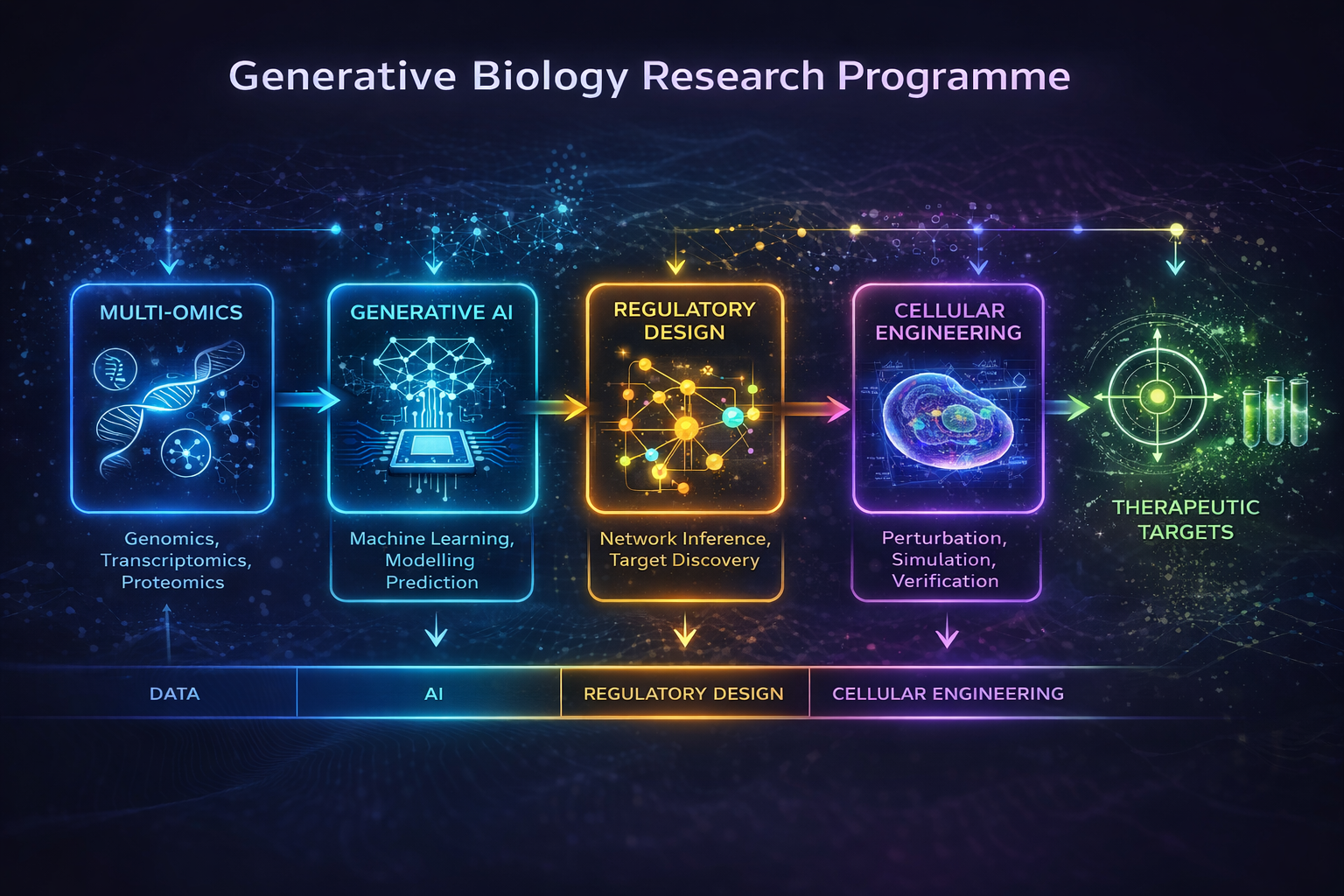
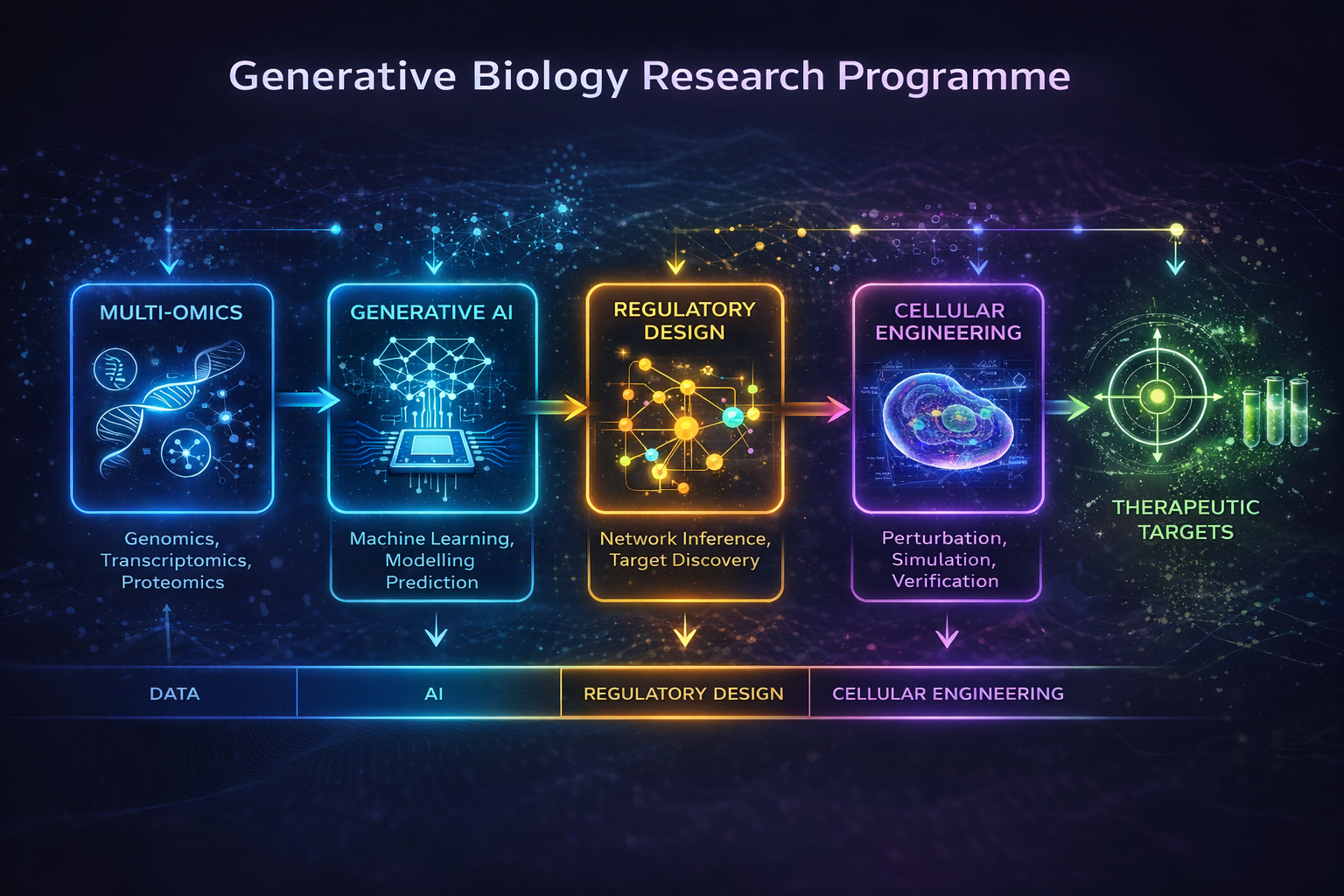
This experimental foundation — spanning transcriptomics, muscle and motor neuron pathology, and validated therapeutic targets — now underpins MyoNeuroTwin, the AI-driven digital-twin platform I am building to accelerate hypothesis generation and drug-target prioritisation from the multi-omics data this programme generates. Built on an established regulatory-network pipeline (STRING, CytoHubba, iRegulon, Enrichr), it is a working prototype in active development, carrying the same disease pathways (mitochondrial dysfunction, DNA-damage-repair failure, proteostasis, immune dysregulation) identified experimentally above from wet-lab discovery into a computational decision framework for personalised medicine and drug discovery.
Collaborations & International Networks
- Professor Albert La Spada (UC San Diego; now Duke University) — provided the AR100 SBMA and ALS4 SETX-R2136H mouse models; co-author across the majority of this publication record.
- Dr Craig Bennett (UC San Diego) — co-provider of the ALS4 mouse model.
- Professor Linda Greensmith — Group Lead, UCL; co-senior author on the majority of these publications.
- Dr Rickie Patani (formerly UCL/Francis Crick Institute, now National University of Singapore) — iPSC-derived motor neuron collaboration underpinning the 2019 and 2025 studies.
- Professor Michael Hanna — Department of Neuromuscular Diseases, UCL Queen Square Institute of Neurology.
- Professor Kenneth Fischbeck (NIH) — provided human stem-cell-derived motor neuron material for the human iPSC programme.
- Professor Pietro Fratta (UCL Queen Square) — FUS and SBMA muscle-biomarker studies (2013, 2019).
- Professor Giampietro Schiavo (UCL Queen Square / UK DRI) — co-author, 2011 axonal transport study.
Research Funding & Patient/Public Engagement
Over £800,000 secured in competitive international funding as Principal or Co-Investigator, from the Motor Neuron Disease Association (UK), Kennedy's Disease Association (USA), AFM France, the Medical Research Council (UK) and the Brain Research Trust.
I act as basic science lead for Kennedy's Disease UK, a patient charity, contributing regular research updates to their website and presenting our work directly to the charity's members and leadership.
The Brain Research Trust funder and Kennedy's Disease UK charity role are carried over from your earlier self-assessment document — flagging again in case they still need folding into the master CV.
Selected Publications
25+ total; * senior author. Full list via Google Scholar, ORCID, and mbm-65w.pages.dev/public.
- Devine H, Roberts MJ, Ziff OJ, Hanna MG, Greensmith L, Patani R, Malik B*. Conserved aberrant developmental trajectories of human and mouse SBMA motor neurons. bioRxiv (2025).
- Gray AL, Annan L, Dick JT, La Spada AR, Hanna MG, Greensmith L, Malik B*. Deterioration of muscle force and contractile characteristics are early pathological events in SBMA mice. Dis Model Mech (2020).
- Lombardi V, Querin G, Ziff OJ, ... Malik B, ... Greensmith L, Hanna M, Sorarù G, Malaspina A, Fratta P. Muscle and not neuronal biomarkers correlate with severity in SBMA. Neurology 92(11), e1205–e1211 (2019).
- Malik B, Devine H, Patani R, La Spada AR, Hanna MG, Greensmith L. Gene expression analysis reveals early dysregulation of disease pathways and links Chmp7 to pathogenesis of SBMA. Sci Rep 9(1), 3539 (2019).
- Bennett CL, Dastidar SG, Ling SC, Malik B, et al. Senataxin mutations elicit motor neuron degeneration phenotypes and TDP-43 mislocalization in ALS4 mice and human patients. Acta Neuropathol 136(3), 425–443 (2018).
- Luisier R, Tyzack GE, Hall CE, ... Malik B, ... Ule J, Luscombe NM, Patani R. Intron retention and nuclear loss of SFPQ are molecular hallmarks of ALS. Nat Commun 9(1), 2010 (2018).
- Rinaldi C, Malik B, Greensmith L. Targeted molecular therapies for SBMA. J Mol Neurosci 58(3), 335–342 (2016).
- Montague K, Malik B, Gray AL, La Spada AR, Hanna MG, Szabadkai G, Greensmith L. Endoplasmic reticulum stress in SBMA: a potential target for therapy. Brain 137(7), 1894–1906 (2014).
- Malik B, Nirmalananthan N, Gray AL, La Spada AR, Hanna MG, Greensmith L. Co-induction of the heat shock response ameliorates disease progression in a mouse model of SBMA. Brain 136(3), 926–943 (2013).
- Malik B, Nirmalananthan N, Bilsland LG, La Spada AR, Hanna MG, Schiavo G, Gallo JM, Greensmith L. Absence of disturbed axonal transport in Spinal and Bulbar Muscular Atrophy. Hum Mol Genet 20(9), 1776–1786 (2011).
Teaching & Supervision
I have led undergraduate and postgraduate teaching within UCL's neuromuscular disease curriculum for over a decade, serving as Module Leader and Lecturer for the MSc Neuromuscular Diseases course and as Lecturer on the BSc and MSc Motor Neuron Disease & Pathomechanisms of MND modules. Since 2008, I have supervised 15+ postgraduate researchers. I have completed UCL's full research supervisor development pathway and am applying for the Good Supervisory Practice Award.
- Present: Jihun Oh (MSc, 2025); Shamso Ali (MRes, 2025).
- PhD: Martha Roberts (2019–2023); Charlotte Kremers (2018–2022); Dr Helen Devine (part-time, 2012–2021); Leonnette Annan (2012–2016); Anna Gray (2012–2015); Karli Montague (2008–2012).
- MSc/MRes: Amy Bowler (2022–2023); Sam Willcox (2021–2022); Hendrik Vogt (2021–2022); Costanza Bertan (2021–2022); C Mousele (2019–2020); E Aksoy (2019–2020); Elisa da Re, visiting fellow (2015); Marta Budzinka (2014); Hanan Ashegh (2014–2016); Abdus Alim (2008).
- BSc: Adiba Haque (2021–2022); Weining Lin (2020); Sammy Stewart (2009).
Institutional Leadership, Editorial & Peer Review
- Institutional leadership & EDI: Faculty of Brain Sciences Race Equity Lead (2022–2024) and Institute of Neurology EDI Mentoring Action Group Lead (2022–2025); member, Institute of Neurology EDI Committee, Equality Awareness Action Group and Department of Neuromuscular Diseases EDI Committee; selected for UCL's Research Team Leaders (2022) and Collaborative Research Leadership (2024–2025) programmes.
- Editorial & peer review: Editorial board member, Scientific Reports; reviewer board member, Frontiers in Molecular Neuroscience and Journal of Neurology, Neurological Science and Disorders, and other Peertechz open-access journals; ad hoc reviewer for Brain, Nature Medicine, European Journal of Neurology, Acta Neuropathologica, Neuroreport, Neuroscience Letters, Neurodegenerative Diseases and Journal of Molecular Medicine.
- Grant review: Motor Neuron Disease Association (UK), Medical Research Council (UK) and Agence Nationale de la Recherche (France).
Your two source documents disagree slightly here — one lists "European Journal of Neuroscience", the other "European Journal of Neurology" as an ad hoc reviewer role. I've used "European Journal of Neurology" above; worth double-checking which is correct.
Selected Invited Talks
- 2024: 271st ENMC International Workshop: Towards a Unifying Effort to Fight Kennedy's Disease, Hoofddorp, Netherlands.
- 2022: Invited speaker, Kennedy's Disease Association & KD-UK Patient Day — "Investigating Disease Pathways and Novel Therapeutic Targets in Kennedy's Disease."
- 2022: National Brain Bee Judge and Speaker — "Careers in Neuroscience: Academic Research, Neurodegeneration and Motor Neuron Disease."
- 2021: Kennedy's Disease Association (USA) "Global Momentum" Conference and International SBMA Research Conference — invited speaker on disease pathways and therapeutic targets in SBMA.
- 2019: 241st ENMC International Workshop, Hoofddorp, Netherlands; UCL Queen Square Institute of Neurology, Department of Neuromuscular Diseases Annual Research Day; ALS Seminar, UCL Queen Square Institute of Neurology.
Note on figures used above: the 2019 Sci Rep paper's published gene counts (178 up / 287 down) are used throughout in place of an earlier draft's provisional 166/260 figures, since the published, peer-reviewed numbers are authoritative. The MyoNeuroTwin platform is described consistently as a working prototype in active development — not as a completed or validated product — to match the framing used across your other CVs and this site.